
Beech Tree Solar Farm
Low Carbon is proposing a new solar farm, to be known as Beech Tree Solar Farm, located on land to the south of Salisbury Road, near Homington. The project will generate approximately 30 megawatts (MW), producing enough clean renewable energy to cover the annual electrical consumption of over 9,600 homes each year.
Welcome to
Beech Tree Solar Farm
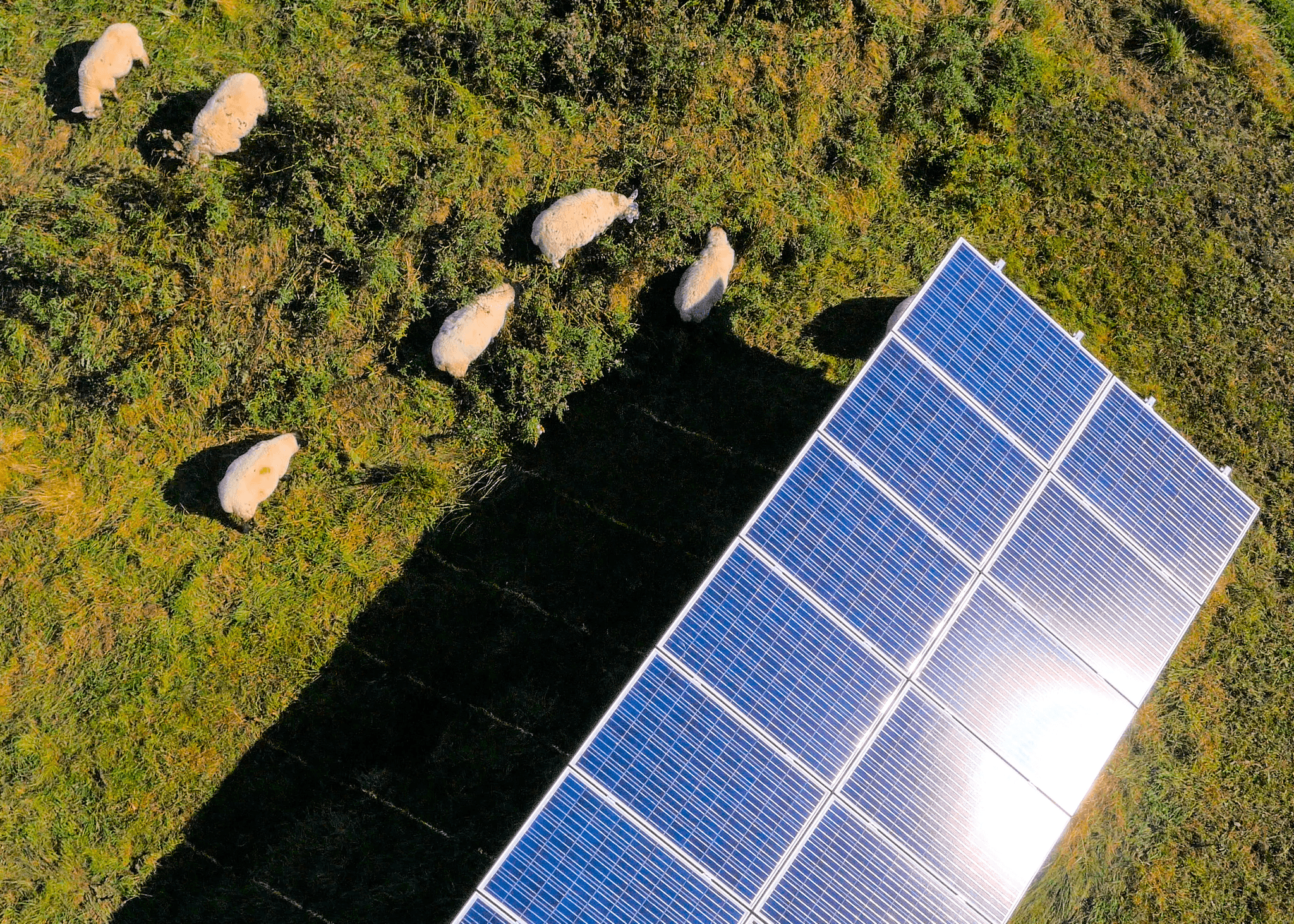
Low Carbon is bringing forward a new renewable energy project along with the infrastructure needed to export the electricity it generates to the local network operator.
Beech Tree Solar Farm, located on land to the south of Salisbury Road, near Homington, will generate approximately 30 megawatts (MW), producing enough clean renewable energy to cover the annual electrical consumption of approximately 9,600 homes each year.
Beech Tree Solar Farm is proposed for a period of 40 years, after which the modules would be decommissioned and removed from the land and as many items will be recycled or re-purposed as possible.
We want to ensure the community around this proposal is informed and fully understands the plans for the project. We encourage feedback and suggestions to help influence the design. Our project website provides a simple and transparent way for the community to provide feedback.
Please note, the deadline for the submission of feedback is Thursday 8 June 2023
Site Location
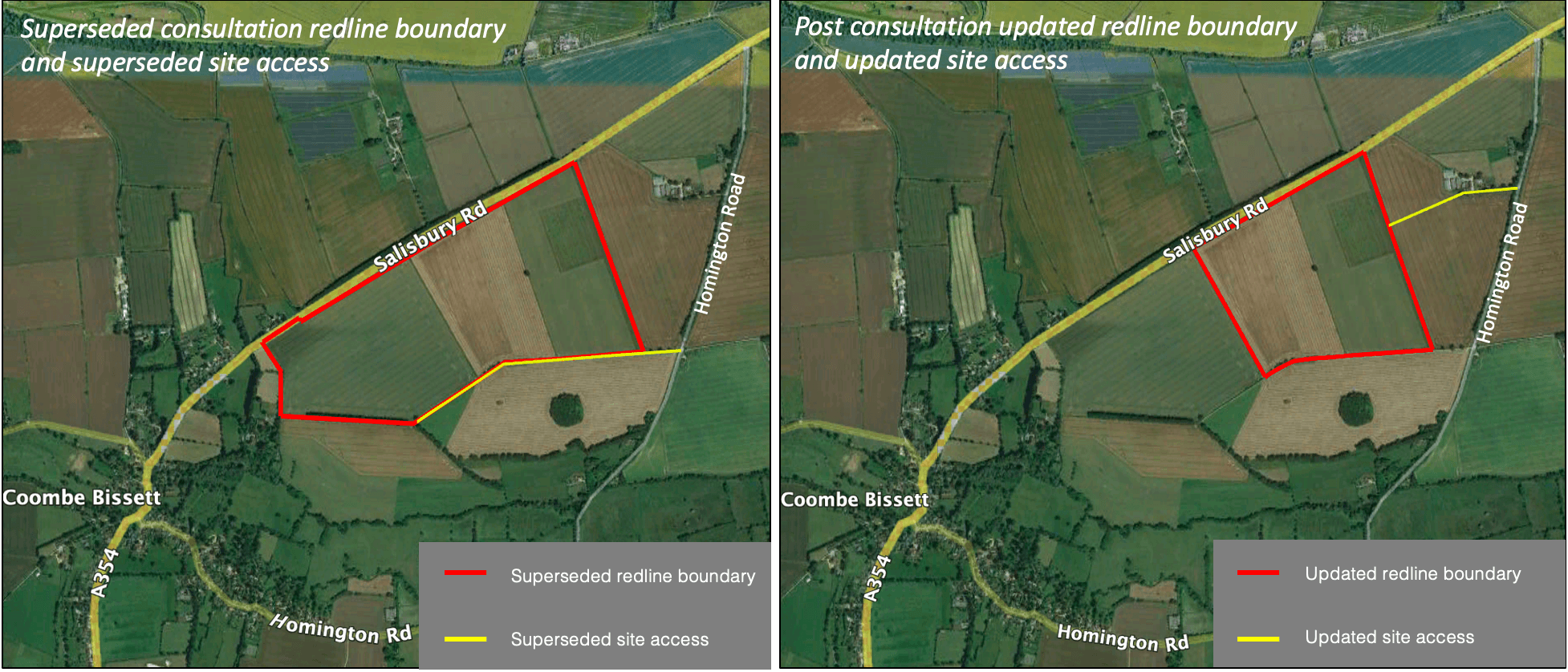
Following consultation and listening to feedback, we have decided to reduce the size of the scheme by 40%, from 69 hectares to 41 hectares.
Construction information
A typical construction period for a solar farm of this scale is around 18-20 weeks. It is proposed that construction working hours would be as follows:08:00 - 18:00 Monday to Friday08:00 - 13:00 Saturday
Changes to proposed access
Our proposed access has been relocated north on Homington road, reducing the length of vehicles travelling along Homington Road by approximately 51% (592m).Reducing the size of the scheme has significant reduced in the number of vehicles anticipated over the 18-20 week construction period.
Access information
The proposed construction and maintenance route will access the site using the A354, turning south onto Homington Road and west into the site using an existing farm access.We have engaged a Highways Consultant to advise us of the best route. A Construction Traffic Management Plan (CTMP) will be agreed with the Local Highways Authority ahead of any construction.How will the site be accessed after construction?Gates would be installed at the site access point for maintenance access. It is expected that under normal circumstances around 3-4 cars/vans would visit the site each week (generally averaging less than 1 a day).
Point of Connection
The electricity generated by the solar panels is proposed to connect into the local distribution network operator into Homington Substation via underground cables. From there the power will likely be distributed locally – into Homington Village, west to Britford, and north to Salisbury before joining the main lines into the wider UK transmission lines.The renewable energy produced from our solar farm connects into a high voltage (HV) cable. As the electricity travels through the local network,
it feeds into the low voltage (LV) cables, which power households and commercial sites (e.g. switching on lights / boiling a kettle).
Timeline
- February to May 2023
Pre-Planning Council Consultation
- March to May 2023
EIA Screening & Parish Consultation
- May to June 2023
Community Consultation
- Autumn 2023
Potential planning application submission to Wiltshire Council
- Winter 2023
Wiltshire Council will consider and determine the application
- Summer 2025
Earliest commencement of Construction (if planning permission is granted)
Additional Information
We have submitted a full planning application to Wiltshire Council (application reference number: PL/2023/10394). Please find the link here: https://development.wiltshire.gov.uk/pr/s/planning-application/a0i3z00001CFDCyAAP/pl202310394
Benefits
Across our UK-wide portfolio of renewable energy projects, we have championed biodiversity as a critical milestone on the journey towards a low-carbon future.
Across all our solar parks we work with landowners and developers to implement comprehensive land and biodiversity management programmes. Each aligns with the conditions and circumstances unique to its site. Yet while we are pledged to protecting existing flora and fauna, most parks benefit still more from the introduction of extensive new planting and husbandry measures.
As sites mature, ongoing development will realise an increasing diversity of habitats and species: from meadows, hedgerows, wildflowers and woodland to sheep, bees, birds, bats, reptiles and invertebrates.
Biodiversity
It is important that the site is improved for nature and shows a biodiversity net gain, thus helping to protect and improve new and existing habitats whilst allowing the land to recover from a monocultural environment. We are thereby creating a species rich haven for wildlife.
Planning conditions tend to require both a Construction Environmental Management Plan (CEMP) and a Landscape and Biodiversity Management Plan (LBMP) to be submitted for approval. The former deals with the construction process measures whilst the latter deals with post-construction measures and those throughout the operation of the project.
Sheep
We work in partnership with the landowner or local shepherds to provide
a unique and innovative space for sheep to graze amongst the solar panels which provide protection in both summer and winter.Grazing sheep at our sites has proved to be hugely popular amongst our landlords for several reasons, notably because the sites are secure which means the sheep are safe and the solar modules provide shelter from the winds and shade from the sun and rain.
Beehives
We encourage the siting of beehives within the solar farm, which not only helps to pollinate nearby crops and plants but provides a secure environment with readily available food sources. The hives are tended by trained local beekeepers to ensure the health and welfare of the bees.
PROW
We would look to keep the Public Rights of Way (PRoW) open throughout construction and operation of the solar farm.
If possible and to maintain the enjoyment of these paths we look to include buffers of meadow or wildflower planting and a thick hedgerow to help screen direct views of the solar farm.
Planting
Our sites are designed around existing hedgerows and trees. We look
to enhance the site with additional planting of native species of hedgerows, trees, pasture-mix grasses and wildflowers.
FAQs
Low Carbon is the developer of this project and we will use the information gathered at the end of the consultation period to advise on the development of the proposed solar farm.
Here is a selection of questions that have been asked relating to solar farm installations/builds.
Why here?
Low Carbon has carefully identified this site as part of a detailed feasibility process to deliver a large-scale clean energy scheme. Many factors are considered by our specialists when evaluating appropriate sites for development. These include considering the available grid locally as well as various planning and environmental constraints.
Solar offers a low cost, safe and low carbon way of delivering clean power to meet this target as well as reduce the levels of carbon dioxide that are being emitted into the atmosphere by replacing electricity generation from fossil fuels.
Why Solar?
The Climate Emergency, the cost of living crisis and the energy crunch are all linked by how we generate, use and supply energy. We urgently need to generate energy from new, low cost, low carbon sources and solar is the lowest cost and quickest to deploy of all energy sources (IRENA, 2022).
Solar is already making a difference, for example between June and August this year, solar often provided up to 25% of UK daytime electricity (National Grid ESO carbon app). The Government’s Energy Security Strategy (2022) proposed a five-fold increase in solar by 2035. This can only be achieved by deploying solar on both land and buildings.
Are there any health risks associated with being in close proximity to solar panels?
Solar panel arrays do emit electric and magnetic fields (EMF) in the same extremely low frequency ranges as electrical appliances and wiring found in most houses and buildings.
The average daily background exposure to magnetic fields is estimated to be around one mG (milligauss – the unit used to measure magnetic field strength), but can vary considerably depending on a person’s exposure to EMF from household electrical devices and wiring.
The lowest exposure level that has been potentially associated with a health effect is three mG. Measurements at three commercial PV arrays in Massachusetts demonstrated that their contributions to off-site EMF exposures were low (less than 0.5 mG at the site boundary), which is consistent with the drop off of EMF strength based on distance from the source (2015, Clean Energy Results).
Will there be visual impacts from Beech Tree Solar Farm?
As part of our ongoing work to determine the design of the project, we are undertaking surveys to ensure the visual impact of the Solar Farm on the local landscape is minimised. This will include screening and the installation of other mitigation measures in the appropriate locations around the perimeter of the land available for the project.
Will Beech Tree Solar Farm use land that could be used from growing crops for food production?
There is always a balance to be found when new development comes forward, with many factors and impacts to consider. Due to its proposed location, Beech Tree Solar Farm will potentially utilise land that could be used for agricultural production. However, the land take involved is minimal in the context of food production across Wiltshire and allows clean energy to be generated at greater scale and efficiency than rooftop alternatives.
Will the solar farm cause any glint and glare?
Solar panels are designed to absorb light and not to reflect it. They pose little risk of glint or glare. Testament to this fact is the installation of solar panels at Gatwick Airport, alongside major roads and beside sports car raceways such as the ‘Top Gear’ test track.
Where will the energy go?
The electricity generated by the solar panels is proposed to connect into the local distribution network operator into Homington Substation via underground cables. From there the power will likely be distributed locally – into Homington Village, west to Britford, and north to Salisbury before joining the main lines into the wider UK transmission lines.
The renewable energy produced from our solar farm connects into a high voltage (HV) cable. As the electricity travels through the local network, it feeds into the low voltage (LV) cables, which power households and commercial sites (e.g. switching on lights / boiling a kettle).
Are solar farms a threat to food security?
The UK Food Security Report (2021) found that “the biggest medium to long term risk to the UK’s domestic production comes from climate change and other environmental pressures such as soil degradation, water quality and biodiversity”.
Solar farms currently account for 0.08% of total land use in the UK (Solar Energy UK 2022). The Government targets for a fivefold increase in solar would result in 0.3% of the UK land area being used by solar (Carbon Brief, 2022). This is the equivalent to around half of the space used by golf courses.
Key Project Documents
In this section, you will find key information about the project which you able to download and view or print at home.